
A toilet that refills for a few seconds after flushing is normal. A toilet that keeps running long after the flush is not. That steady sound can waste a surprising amount of water, raise your utility bill, and signal that a small part inside the tank is no longer doing its job.
The good news is that many running-toilet problems come down to a few inexpensive components. The less-good news is that guessing can turn a simple repair into repeated trips to the hardware store – or hide a larger issue, such as a damaged overflow tube or a failing flush valve. Start with a safe, simple inspection, then know when it is time to bring in a plumbing professional.
Why a Toilet Keeps Running
Your toilet tank has a simple job: hold enough water for the next flush, release that water into the bowl when you press the handle, then refill to a set level. If water is escaping from the tank or the fill system does not shut off, the toilet continues trying to replace it.
Most of the time, the cause falls into one of two categories. Either water is leaking quietly from the tank into the bowl, or the tank is overfilling and sending water down the overflow tube. The sound may be constant, intermittent, or a refill cycle that starts every few minutes. Each pattern offers a useful clue.
The flapper is worn, dirty, or out of position
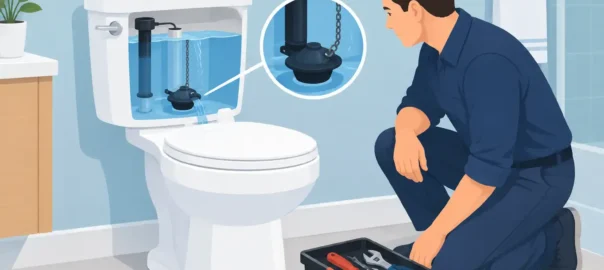
The flapper is the rubber seal at the bottom of the tank. When you flush, it lifts so water can enter the bowl. When the flush ends, it should settle flat against the flush valve opening and create a watertight seal.
Rubber flappers wear out over time. They can become warped, stiff, cracked, coated with mineral buildup, or too heavy to seal correctly. A loose or tangled chain can also hold the flapper slightly open. In those cases, water slowly slips into the bowl and the fill valve turns on periodically to restore the tank level.
This is one of the most common causes of a running toilet and often one of the simplest repairs. Still, a replacement flapper must match the toilet’s flush valve size and design. An almost-right flapper can keep leaking.
The fill valve is set too high or is failing
The fill valve controls the water entering the tank after a flush. As the water rises, a float tells the valve when to shut off. If the float is set too high, the water level may rise above the top of the overflow tube. The extra water then drains into that tube, and the fill valve keeps supplying more.
Open the tank lid and look at the water level. It should generally stop about an inch below the top of the overflow tube. If water is flowing into the tube, the fill valve may need an adjustment or replacement.
A fill valve can also wear out internally. You may hear a hissing sound, see a weak or inconsistent refill, or notice that the valve never fully shuts off even when the tank reaches the correct level. Older valves are especially prone to mineral buildup and worn seals.
The overflow tube or flush valve has a problem
The overflow tube prevents the tank from spilling onto the bathroom floor if the fill valve fails. It is a safety feature, but it should not carry water during normal operation. A cracked tube, a tube installed at the wrong height, or a deteriorating flush valve assembly can create persistent running that is not solved by replacing only the flapper.
If you see water entering the overflow tube even after adjusting the float, or if the flapper seat looks rough, cracked, or corroded, the repair may require replacing the flush valve. That means removing the tank from the bowl on many toilet models. It is a manageable project for an experienced DIY homeowner, but it is also where leaks from loose bolts, worn tank-to-bowl gaskets, or overtightened porcelain can become a concern.
The refill tube is placed incorrectly
The small refill tube sends water into the overflow tube during the refill cycle. That helps refill the bowl after flushing. If this tube is pushed too far down into the overflow pipe, it can create a siphon that continuously pulls water from the tank.
The fix may be as simple as clipping the refill tube to the top edge of the overflow tube so it points downward without extending inside. It should never be sealed or taped into the overflow tube.
A Safe Way to Check the Problem
Before replacing parts, take a few minutes to identify where the water is going. Remove the tank lid carefully and place it on a towel or stable surface. Porcelain lids can crack easily.
First, flush the toilet and watch the refill process. Look for water flowing into the overflow tube, a flapper that does not close all the way, or a chain that is too tight. The chain should have a little slack when the flapper is closed. If it is pulling upward, shorten neither the chain nor the problem by force – adjust it so the flapper can rest flat while still lifting fully on a flush.
Next, try a dye test. Add a few drops of food coloring to the tank and wait 15 to 20 minutes without flushing. If colored water appears in the bowl, water is leaking past the flapper or flush valve. If the tank level remains stable but the fill valve continues to hiss, the fill valve is the more likely culprit.
If the toilet is actively overflowing, water is spilling from the tank, or you need to stop the waste right away, turn the shutoff valve behind or beside the toilet clockwise. This stops the water supply. You can flush once afterward to empty most of the tank, but do not keep using the toilet until the issue is corrected.
When a Simple Repair Makes Sense
A homeowner can often handle a straightforward flapper replacement, refill-tube adjustment, or fill-valve replacement if the shutoff valve works properly and there is no visible damage to the toilet. Bring the old part or clear photos of the tank setup when purchasing a replacement. Toilet parts vary more than they appear to at first glance.
Take your time with adjustments. Setting the water level too low can lead to weak flushing. Setting it too high wastes water and may keep the toilet running. After any repair, flush several times and inspect the floor around the base and supply connection for leaks.
DIY repair becomes less appealing when the toilet is old, the tank bolts are rusted, the porcelain is cracked, the shutoff valve will not close, or multiple parts have failed. A toilet that runs intermittently can also be frustrating because it may seem fixed while you are standing there, then begin leaking again later.
When to Call a Plumber for a Running Toilet
Call a plumber when basic adjustments do not stop the problem, water continues entering the overflow tube, or you suspect the flush valve assembly needs replacement. Professional diagnosis is also the safer choice when the toilet has a crack, the supply line is leaking, or the shutoff valve is unreliable.
A trained technician can confirm whether the problem is limited to the tank hardware or connected to another issue, such as improper water pressure, a damaged bowl, or a toilet that is no longer worth repairing. The goal should not be to replace parts until the sound stops for a day. It should be to correct the actual source of water loss.
Empire Care technicians approach plumbing repairs with that standard in mind: identify the cause, explain the repair clearly, and help protect your home from repeat problems. A running toilet may feel minor, but wasted water adds up every day it is left unresolved.
If the repair does not hold, do not keep living with the sound or hoping the next adjustment works. Turn off the supply if needed, protect your water bill, and get the toilet checked before a small tank problem becomes a larger plumbing headache.