

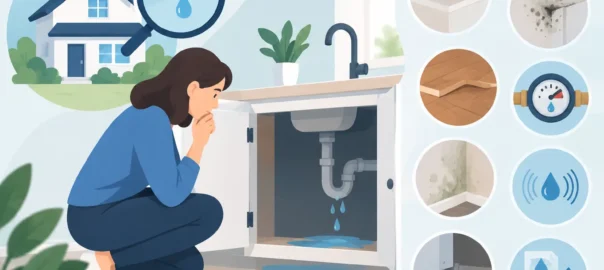
A water leak does not need to flood the kitchen to cause expensive damage. A faint musty smell behind a bathroom wall, a water bill that suddenly climbs, or a warm patch on the floor can all point to water escaping where it should not. Hidden water leak detection at home is about noticing those early warnings before moisture damages framing, flooring, insulation, or indoor air quality.
Some leaks are simple fixes, such as a toilet flapper that never fully seals. Others are buried behind walls, under slabs, or beneath landscaping. The goal is not to tear into your home looking for a problem. It is to gather a few clear clues, stop active damage when necessary, and bring in a qualified plumber when the evidence points to a concealed leak.
9 signs you may have a hidden water leak
1. Your water bill rises without a clear reason
A higher bill is not always a leak. Seasonal lawn watering, houseguests, filling a pool, or a new appliance can raise usage. But if your household routine has not changed and the bill keeps increasing, water may be running continuously somewhere out of sight.
Compare the current bill with the same month last year when possible. This helps account for normal seasonal changes and makes a true usage spike easier to spot.
2. Your water meter moves when everything is off
The water meter is one of the most useful tools for hidden water leak detection at home. Turn off faucets, ice makers, washing machines, dishwashers, irrigation, and any other water-using equipment. Then check the meter. Many meters have a small leak indicator that spins or pulses with even a small amount of flow.
If the indicator continues moving after all water use has stopped, there may be a leak on the plumbing system. Check again after 30 to 60 minutes without using water. A changing reading adds stronger evidence, but it does not identify the location or cause.
3. You hear water when no fixture is running
A steady hiss, faint rushing sound, or occasional tapping inside a wall deserves attention, especially in a quiet house. Water pressure can make a small pipe leak surprisingly audible. You may hear it near a bathroom, laundry room, water heater, or basement ceiling.
Do not confuse pipe noise with normal sounds from an ice maker, water softener, sump pump, or HVAC system. If the sound persists and you cannot connect it to a working appliance, a professional inspection is the safer next step.
4. Walls, ceilings, or floors change color or texture
Discoloration is one of the clearest visual warnings. Look for yellow or brown ceiling rings, bubbling paint, peeling wallpaper, warped baseboards, or drywall that feels soft when gently pressed. On flooring, watch for cupping hardwood, loose vinyl, cracked tile, or carpet that feels damp along an edge.
Water does not always appear directly below the leak. It can travel along pipes, framing, and ceilings before becoming visible. That is why a stain is a signal to investigate, not proof of where the pipe has failed.
5. A musty odor keeps returning
A damp, earthy smell in a bathroom, closet, laundry room, or lower level often means moisture has been present long enough to affect surrounding materials. Cleaning the room may temporarily cover the odor, but it will not solve a leak behind the wall or below the floor.
Mold can develop where persistent moisture is left untreated. If you see visible growth, experience a strong odor, or find damaged materials, address the water source first. Cosmetic repairs should come after the leak has been located and corrected.
6. Your toilet seems to run on its own
A toilet can quietly waste a significant amount of water without leaving a puddle on the floor. If it refills at random, makes a soft running sound between flushes, or causes the meter to move, the flapper, fill valve, or flush valve may be leaking internally.
A simple dye test can help. Add a few drops of food coloring to the tank and wait about 15 minutes without flushing. If color appears in the bowl, water is passing through the toilet. This is often a straightforward repair, but it should not be ignored.
7. There is a warm spot on the floor
A warm area on a slab floor can indicate a hot-water line leak below the concrete. You may also notice that the water heater runs more often or that hot water seems to run out sooner than usual. In some homes, a cold-water slab leak can create cool or damp areas instead.
This is not a project for guesswork. Cutting flooring or concrete before the leak is properly located can add unnecessary cost and disruption. Leak detection equipment helps narrow down the source so repairs can be planned with less damage to your home.
8. Water pressure has changed
A sudden pressure drop throughout the house can have several causes, including a failing pressure regulator, a municipal supply issue, mineral buildup, or a plumbing leak. If lower pressure appears alongside high water use, sounds of running water, or damp spots, take the combination seriously.
Pressure that fluctuates can also strain fixtures and appliances. A plumber can test pressure, inspect accessible components, and determine whether the issue is related to the supply line, a fixture, or a hidden leak.
9. Your yard has one unusually wet or green area
A soggy patch, mud during dry weather, or a strip of grass that grows faster than the rest of the lawn can indicate a damaged underground water line. Water may also pool near the foundation or emerge near a driveway, sidewalk, or exterior wall.
First rule out irrigation. A leaking sprinkler line can create similar symptoms, and the repair approach differs from a main water service line problem. If the area remains wet when irrigation is off, schedule an inspection promptly.
What to do when you suspect a leak
Start by protecting the home, not by opening walls. If water is actively flowing, turn off the fixture valve if you can identify it. For a major leak, use the main shutoff valve. Every homeowner should know where this valve is located and make sure it can be operated before an emergency occurs.
Next, document what you see. Take photos of stains, wet flooring, meter readings, and any damage that changes over time. Note when you first noticed the problem, whether it worsens after using hot water or certain fixtures, and whether the water is clean, rusty, or sewage-contaminated. These details can speed up diagnosis.
Avoid relying on temporary patches for a concealed leak. Tape, sealant, and a dehumidifier may limit surface symptoms, but they do not repair a compromised pipe or fitting. Likewise, do not run a water heater, dishwasher, or washing machine if a leak may be affecting nearby electrical connections.
When to call a plumber right away
Call for professional help immediately if water is coming through a ceiling, pooling near electrical outlets, soaking flooring, or affecting a water heater. The same applies when you suspect a slab leak, a broken underground line, sewage backup, or mold caused by ongoing moisture.
For less urgent signs, a licensed plumber can use pressure testing, moisture readings, camera inspection where appropriate, and specialized leak-location methods to identify the source without unnecessary demolition. The right repair depends on the pipe material, accessibility, age of the system, and extent of damage. Sometimes a targeted repair is the sensible choice; in an older system with repeated failures, replacement of a larger section may provide better long-term value.
Empire Care approaches plumbing problems with clear diagnosis and practical next steps, so you are not left guessing whether a stain, sound, or bill is becoming a larger repair.
A hidden leak rarely gets cheaper by waiting. If your meter is moving, your home smells damp, or a surface is changing for no clear reason, protect your property by getting the source checked before a small warning becomes a major restoration project.