

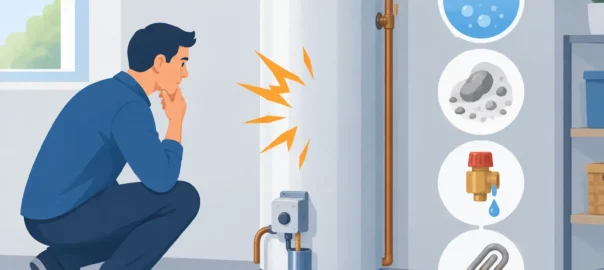
A pop or rumble from the water heater can make a quiet home feel suddenly uncertain. Most water heater popping noise causes come down to mineral sediment heating inside the tank, but the right response depends on the sound, the age of the unit, and whether other warning signs are present. A little noise may not mean an emergency. Ignoring a noisy heater for months, however, can raise energy bills, reduce hot-water capacity, and shorten the life of the system.
Why a Water Heater Pops
Tank-style water heaters heat water at the bottom of a steel tank. Over time, minerals naturally found in the water supply settle there. This is especially common in areas with hard water, but it can happen in any home.
As the burner or electric heating element heats the tank bottom, water trapped beneath that sediment turns to steam. The steam pushes through and releases in small bursts, creating a popping, crackling, or rumbling sound. Think of it as a thin layer of minerals acting like a lid over pockets of hot water.
The sound is often more noticeable after a long stretch of hot-water use, such as several showers, laundry, and dishwashing in the same morning. It may also happen while the unit is reheating a full tank.
Sediment is the most common explanation, but it is not the only one. A proper diagnosis looks beyond the noise itself.
The Most Common Water Heater Popping Noise Causes
Sediment buildup in the tank
This is the usual culprit. Minerals, sand, rust particles, and other debris settle to the bottom of the tank. The heater must work harder to transfer heat through that layer, so the system may run longer while producing less usable hot water.
A sediment-related pop is generally not an immediate safety event. Still, it is a maintenance issue worth addressing. Left in place, heavy sediment can contribute to overheating, tank damage, inefficient operation, and an earlier replacement than you planned for.
Scale on an electric heating element
Electric water heaters can make a popping or sizzling sound when mineral scale coats a heating element. The element gets hotter than it should as it works through the buildup. In some cases, homeowners also notice slower recovery times or water that does not get as hot as expected.
Unlike a gas heater, an electric model does not have a burner beneath the tank. The source of the sound may be inside the tank around the element rather than at the bottom of a combustion chamber. A technician can test the elements and determine whether cleaning, replacement, or broader tank maintenance makes sense.
A failing dip tube
The dip tube directs incoming cold water to the lower part of the tank, where it can be heated efficiently. If it cracks, breaks apart, or shifts, cold water may mix near the top of the tank too soon. This can lead to inconsistent hot water and occasional unusual sounds as temperatures change rapidly inside the tank.
A dip-tube problem is less common than sediment, but it is worth considering if the popping comes with lukewarm water, reduced hot-water volume, or small plastic pieces caught in faucet aerators.
Expanding and contracting pipes
Not every pop is coming from the heater itself. Hot water causes metal pipes to expand slightly. As they move against framing, straps, or other surfaces, they can make a sharp ticking, popping, or knocking sound.
Pipe-expansion noises often occur right after a hot-water faucet opens or closes. They may be heard in a wall, ceiling, or floor near the water heater rather than directly at the tank. The fix can be as simple as adjusting pipe supports or adding insulation where piping passes through tight spaces, but it takes an inspection to locate the exact contact point.
Pressure or temperature problems
A water heater should not operate with excessive temperature or pressure. The temperature-and-pressure relief valve, often called the T&P valve, is designed to release water if either condition becomes unsafe. If you hear loud banging, see water around this valve or its discharge pipe, smell gas near a gas water heater, or notice steam, treat the situation seriously.
Turn off the water heater if you can do so safely, keep people away from the area, and call a qualified professional. Do not cap, plug, or block a relief valve discharge pipe. That valve is a critical safety component, not a source of inconvenience to silence.
Is a Popping Water Heater Dangerous?
Usually, a mild, occasional pop caused by sediment does not mean the tank is about to fail. It does mean the unit is working under less-than-ideal conditions. The more frequent or louder the noise becomes, the more likely the buildup is significant.
The situation becomes more urgent when popping is paired with leaking water, rusty water, a sulfur or gas smell, a tripped breaker, scorch marks, steam, or a relief valve that is actively discharging. Those symptoms can point to a different problem than ordinary sediment and should not be handled as a routine maintenance project.
Age matters, too. Many traditional tank water heaters last roughly eight to 12 years, though water quality, maintenance, usage, and installation conditions can change that range. Flushing a newer tank with manageable sediment can be worthwhile. On an older heater with heavy buildup, corrosion, or active leaks, the better financial choice may be replacement rather than putting more money into a tank near the end of its service life.
What You Can Check Safely Before Calling
Start by identifying when and where you hear the sound. Does it happen only while the heater is recovering after use? Is it a soft pop, a low rumble, a metallic bang, or a high-pitched whistle? Is the tank leaking, or are the pipes above it making the noise?
You can also look around the unit without removing panels or touching gas, electrical, or hot-water connections. Check for puddles, corrosion around fittings, moisture at the base of the tank, and water coming from the T&P valve discharge pipe. For gas units, leave the area and seek prompt help if you smell gas. Do not attempt to relight a pilot or diagnose a gas odor yourself.
If the area is dry and the only symptom is a mild rumble or popping during heating, schedule maintenance before the problem grows. Do not use a garden hose to drain or flush a heater unless you understand the manufacturer procedure and can safely shut down the unit. Water can be hot enough to cause burns, drain valves can fail on older tanks, and disturbing thick sediment can sometimes expose an already-weakened tank to new problems.
How Professional Service Solves the Problem
A qualified technician starts by confirming whether the sound is sediment, piping movement, a heating-element issue, or a pressure-related concern. That distinction matters. A tank flush will not fix a loose pipe, and replacing an element will not solve a corroded, leaking tank.
For a serviceable tank, maintenance may include flushing accumulated sediment, checking the anode rod, inspecting the T&P valve and discharge piping, verifying temperature settings, and examining gas or electrical components. The technician should also check for signs that the tank is deteriorating from the inside, where problems are not always visible to a homeowner.
If replacement is the more dependable option, you should receive a clear explanation of why. Tank size, household hot-water demand, fuel type, venting requirements, energy use, and available space all affect the right choice. A larger tank is not automatically better, and a high-efficiency or tankless system is not automatically the best fit for every home. The goal is reliable hot water without paying for equipment that does not match your household.
Preventing Future Popping and Rumbling
Regular maintenance is the best defense against sediment-related noise. The ideal schedule depends on water hardness, how much hot water your household uses, and the type of water heater you own. Homes with hard water often need more frequent attention because mineral deposits accumulate faster.
Water temperature also affects wear. Many households do well with a setting around 120 degrees Fahrenheit, which can reduce scalding risk and limit unnecessary strain. Your needs may differ if someone in the home has special health requirements, so ask a professional before making major temperature changes.
If recurring sediment is a problem, ask whether water treatment, a filtration approach, or a maintenance plan would offer real value. The answer depends on your water quality and equipment. The best fix is the one that addresses the source of the buildup, not simply the sound it makes.
A water heater should provide quiet, dependable comfort in the background of daily life. When popping starts, a timely inspection can protect your hot water, your budget, and your confidence in the system that keeps your home running.