

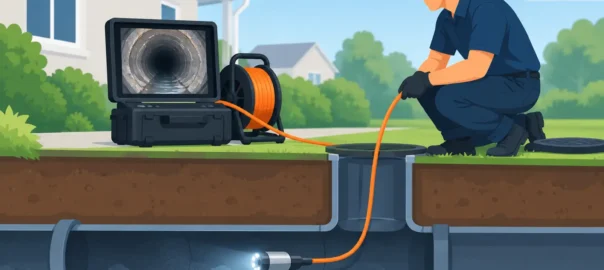
A sewer backup rarely begins with a dramatic flood. More often, it starts with a toilet that bubbles, a tub that drains slowly, or a stubborn clog that returns a few weeks after it was cleared. When the problem is inside a pipe you cannot see, guessing can lead to repeat service calls and unnecessary disruption. So, how does sewer camera inspection work? A trained plumber sends a specialized waterproof camera through the drain line to see the condition of the pipe from the inside.
The goal is simple: identify the real cause and location of the problem before recommending a repair. Instead of treating every recurring clog as a basic blockage, a camera inspection gives your plumber visual proof of what is happening underground or behind walls.
How Does a Sewer Camera Inspection Work?
A sewer camera inspection uses a small high-resolution camera attached to a flexible cable. The technician typically inserts the camera through an accessible cleanout, which is a capped pipe that provides entry to the sewer line. In some homes, the camera may be fed through a roof vent or another appropriate drain opening when a cleanout is not available.
As the cable moves through the line, the camera sends live video to a monitor. The technician guides it through bends, fittings, and long runs of pipe while watching for obstructions, damage, and changes in pipe material. Many systems also include a location transmitter, called a sonde, in the camera head. Above ground, the technician can use a receiver to locate the camera and estimate its depth.
That location matters. If the video shows a break or root intrusion, the plumber can mark the affected area rather than excavating an entire yard or opening more flooring than necessary. The inspection may also record footage or capture still images, giving you a clear explanation of the findings.
A camera does not clean the line by itself. If heavy grease, standing water, or packed debris prevents the camera from moving through the pipe, the line may need to be cleared first. In those cases, drain cleaning and camera verification work together: one restores flow, and the other helps confirm why the blockage happened and whether the pipe has a larger issue.
What a Sewer Camera Can Find
A camera inspection is especially useful because several very different problems can create the same symptom. A slow drain may be caused by a simple buildup near a fixture, while repeated backups throughout the home can point to trouble in the main sewer line.
During the inspection, a plumber may find tree roots entering through joints or small cracks. Roots naturally seek water and nutrients, so even a minor opening in an older sewer pipe can attract them. Over time, they can catch toilet paper and waste, narrowing the line until backups occur.
The video can also reveal cracked, crushed, shifted, or collapsed pipe sections. These issues are more common in aging clay, cast-iron, Orangeburg, or poorly supported pipe, but damage can affect newer materials too. Soil movement, construction activity, heavy vehicles, and freezing conditions can all contribute.
Other common findings include grease buildup, wipes and foreign objects, separated joints, pipe bellies, and corrosion. A belly is a low area where a pipe has sagged and holds water or waste instead of carrying it away. A camera can show the standing water, but determining the exact slope issue may require additional evaluation.
Not every mark on the screen means the pipe needs replacement. Light scale inside cast iron, minor buildup, or a small root strand may be manageable with cleaning and maintenance. A dependable recommendation should match the condition shown on the video, the age of the pipe, the frequency of backups, and the likelihood of the problem returning.
When a Camera Inspection Makes Sense
A sewer camera inspection is not necessary for every single slow sink. A clog limited to one bathroom sink is often located in that fixture’s drain and can be resolved without inspecting the entire sewer line. But a camera becomes a smart next step when symptoms suggest a deeper or recurring issue.
Consider requesting one if multiple drains back up at once, sewage appears in a tub or shower when a toilet is flushed, or a drain clog keeps returning after cleaning. It is also valuable if you smell sewer gas, hear gurgling from drains, notice unusually green patches in the yard, or are planning to buy a home with an older sewer line.
For homebuyers, a sewer scope can provide useful information that a standard home inspection may not uncover. The line may look fine from the outside while roots, corrosion, or a partial collapse is developing below ground. It is not a guarantee that no future plumbing issue will occur, but it can help you make a better-informed decision before taking on a major repair.
Commercial properties can benefit as well. A recurring sewer issue can disrupt restrooms, employees, customers, and daily operations. Camera diagnostics help property managers understand whether they need routine maintenance, targeted repair, or a larger sewer-line plan.
What Happens After the Inspection
Once the camera reaches the problem area or the end of the accessible line, the technician reviews what the video shows. You should expect a plain-language explanation of the finding, where it is located, and what options make sense.
If the issue is a buildup or root blockage in an otherwise sound pipe, professional drain cleaning may be the practical repair. If the camera shows a localized crack or separated joint, a targeted repair may be possible. When the pipe has widespread deterioration, repeated root intrusion, or significant bellies and collapse, replacement may provide more reliable long-term protection.
There are trade-offs. Cleaning may cost less upfront but will not repair a damaged pipe. Spot repair can be effective when the rest of the line is in good condition, while full replacement is a larger investment that may prevent repeated disruptions. Your plumber should explain the evidence behind each option instead of pushing a one-size-fits-all answer.
In some cases, the camera cannot pass through a fully collapsed section or an extremely packed blockage. That is still useful information. The technician can locate the stopping point, clear the line if possible, and determine what further work is needed. A camera inspection is a diagnostic tool, not a promise that every pipe can be completely viewed under every condition.
How to Prepare for a Sewer Camera Visit
Most homeowners do not need to do much preparation. If you know where the exterior or basement cleanout is located, clear access to it. Move stored items away from utility areas, keep pets safely out of the work area, and share any history of past backups, drain cleaning, sewer repairs, or large trees near the sewer route.
Avoid running large amounts of water while the inspection is underway unless the technician asks you to. It can also help to mention whether the issue affects one fixture or several. Details such as “the shower backs up when the washing machine drains” can help the plumber choose the right diagnostic path from the start.
A professional inspection should leave you with more than a vague statement that the line is “bad.” You deserve to know what was found, how serious it appears, and what repair approach protects your home and budget. Visual verification is especially valuable after a drain cleaning or repair because it helps confirm the work addressed the actual obstruction or damaged section.
When drains keep giving you the same warning, do not settle for another guess. A sewer camera inspection brings the hidden condition of your plumbing into view, helping you make a calm, informed decision before a small drainage problem becomes a messy home emergency.