

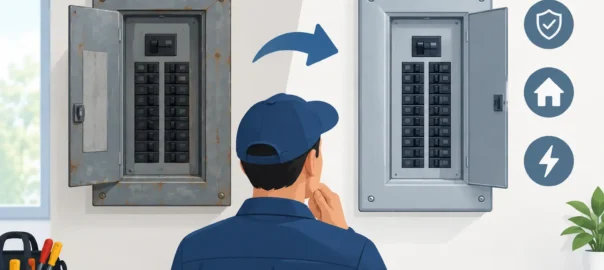
A tripped breaker after running the microwave and toaster may be inconvenient. A panel that feels warm, smells burned, or repeatedly loses power is a different kind of problem. Knowing when should electrical panel be replaced helps you protect your home before an aging or overloaded electrical system becomes a safety concern.
Your electrical panel is the control center for the power running through your home. It distributes electricity to lights, outlets, appliances, heating and cooling equipment, and more. When it is working properly, you probably never think about it. When it is not, the warning signs deserve prompt attention from a licensed electrician.
When Should an Electrical Panel Be Replaced?
An electrical panel should be replaced when it can no longer safely handle your home’s electrical demand, shows physical damage or overheating, uses obsolete equipment, or has a defect that makes it unreliable. Replacement is not based on age alone. Some older panels remain serviceable after a professional inspection, while a newer panel may need attention if it was improperly installed or overloaded.
The right decision begins with an on-site evaluation. An electrician can inspect the panel, breakers, wiring connections, grounding, service capacity, and signs of heat damage. That assessment separates a repairable issue, such as a failed breaker, from a panel that has reached the end of its safe working life.
Warning Signs You Should Not Ignore
Electrical problems do not always mean you need a new panel, but they do mean it is time to have one checked. Do not keep resetting breakers or working around a power issue without finding the cause.
Watch for these signs:
- Breakers trip often. An occasional trip can protect your home from an overloaded circuit. Repeated trips, especially on the same circuit, can point to overloading, faulty wiring, or a breaker that is no longer functioning correctly.
- Lights flicker or dim. Lights that dim when an appliance starts may signal a heavy electrical load. Frequent flickering throughout the home can indicate a panel, connection, or service issue.
- The panel is hot, buzzing, or smells burned. Heat, crackling sounds, scorch marks, rust, or a burning odor require immediate professional attention. Turn off power if it is safe to do so and call for electrical service.
- You have fuses instead of circuit breakers. Fuse boxes are common in older homes and may not provide the capacity or protection modern households need. Replacing a fuse with a larger one is never a safe fix.
- Outlets feel warm or show discoloration. This can be related to a circuit problem, loose connection, or overloaded wiring. The panel may not be the only issue, but it should be part of the inspection.
A breaker that trips is doing a job. The concern is not the trip itself. The concern is a pattern of tripping that tells you the circuit or panel is under more stress than it should be.
Obsolete Panel Brands Need Special Attention
Some older panel brands have a history of safety concerns and should be evaluated as soon as possible. Federal Pacific Electric panels, often identified as FPE or Stab-Lok, and certain Zinsco or Sylvania-Zinsco panels are examples that electricians commonly flag. Their breakers may fail to trip properly during an overload or short circuit.
If your home has one of these panels, do not wait for a visible problem. A licensed electrician can identify the equipment and recommend a replacement path based on your home’s needs.
Your Home May Have Outgrown Its Electrical Capacity
Homes use far more electricity than they did a few decades ago. Today, a single household may have multiple computers, large televisions, high-powered kitchen appliances, smart-home devices, electric vehicle charging, and upgraded heating or air conditioning equipment. An older 60-amp or 100-amp service may not be enough for the way your family lives now.
A panel upgrade is often needed before or during major improvements. Adding central air, a heat pump, hot tub, electric range, workshop equipment, finished basement, home addition, or EV charger can increase demand beyond what the current panel can support.
This does not mean every project requires a full panel replacement. Sometimes there is adequate capacity, and a new dedicated circuit is all that is needed. Other times, the panel has no room for additional breakers or the service feeding it is too small. An electrical load calculation gives you a clear answer instead of a guess.
Age Matters, But Condition Matters More
Many electrical panels last 25 to 40 years, though that range is only a rough guideline. Moisture, corrosion, poor installation, power surges, loose connections, heavy use, and prior modifications can shorten a panel’s useful life.
An older panel without trouble is not automatically unsafe. Still, it is wise to schedule an inspection if the panel is approaching several decades of use, particularly before buying a home, remodeling, or adding major appliances. A professional can look for corrosion, improper breaker sizing, double-tapped breakers, missing knockouts, poor grounding, and other conditions homeowners cannot reliably diagnose from the outside.
If a panel has been exposed to water from a leak, flood, or storm damage, have it inspected before relying on it again. Water and electricity are a dangerous combination, and corrosion can continue to cause problems after surfaces appear dry.
Panel Repair vs. Replacement: What Is the Difference?
Not every electrical issue calls for a new panel. A single bad breaker, loose connection, damaged outlet, or overloaded circuit may be repaired without replacing the entire box. That is why a proper diagnosis matters. Replacing a panel when a smaller repair will safely solve the issue is unnecessary. On the other hand, replacing only a breaker in a damaged, obsolete, or undersized panel can postpone a larger safety problem.
Replacement is generally the better long-term choice when the panel has widespread corrosion or heat damage, uses unsafe or discontinued equipment, lacks capacity for needed circuits, or has repeated failures. It can also make future repairs and upgrades easier because modern panels provide clearer labeling, more breaker space, and current safety protections.
A panel replacement may include upgrades to grounding, bonding, surge protection, or the service equipment. The exact scope depends on local code requirements and the condition of your existing electrical system. Your electrician should explain what is included, what the work solves, and whether utility coordination or permits are required.
What to Do If You Notice a Serious Electrical Warning Sign
If you smell burning, see smoke, hear arcing or loud buzzing, or notice a hot panel, treat it as urgent. Do not touch the panel if it is wet, damaged, or sparking. Keep people away from the area, call emergency services if there is immediate fire danger, and contact a licensed electrician.
For less urgent concerns, such as recurring breaker trips or limited breaker space, schedule an inspection before installing another appliance or beginning a renovation. Avoid do-it-yourself panel work. Even with the main breaker off, parts of the electrical equipment may remain energized, and improper work can create a serious shock or fire hazard.
Plan the Upgrade Around Your Real Needs
The best replacement panel is not simply the largest one available. It should be sized for your current electrical load, planned upgrades, and likely future needs. A household that expects to add an EV charger or switch to electric heating may benefit from planning capacity now rather than paying for another major upgrade later.
A qualified electrician can walk you through the trade-offs, including panel size, available circuit space, service upgrades, permits, and the condition of the wiring already in your home. Clear answers make it easier to invest with confidence and avoid surprise limits when you are ready for your next home improvement project.
Your home should not ask you to choose between convenience and safety. If your panel is sending warning signs or cannot keep up with how you use power, having it professionally evaluated is a practical next step toward a safer, more dependable home.