

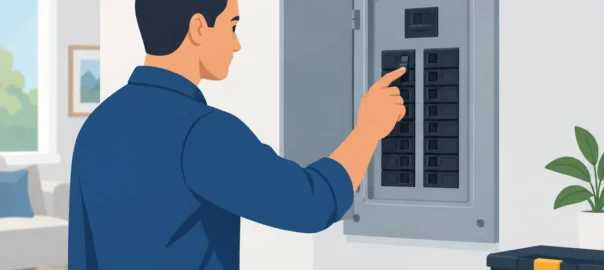
A sudden loss of power to one room is frustrating, especially when the refrigerator, home office, bathroom outlet, or furnace stops working without warning. Knowing how to reset a tripped breaker can restore power quickly, but only when the electrical panel shows no signs of a larger safety problem.
A breaker trips because it is designed to protect your home. It shuts off electricity when a circuit is overloaded, a device has a fault, or wiring may be drawing more current than it safely can. Resetting it is usually simple. Repeatedly forcing it back on is not.
First, make sure it is safe to touch the panel
Before opening the electrical panel, look and listen. Do not reset a breaker if you smell burning plastic, see smoke, notice scorch marks, hear buzzing or crackling, or feel heat coming from the panel cover. Step away from the area and call a licensed electrician. Those signs can point to a loose connection, damaged wiring, or a failing breaker that needs professional repair.
Do not stand in water or touch the panel with wet hands. If flooding, a burst pipe, roof leak, or damp wall may have affected the panel or nearby outlets, leave the circuit off. Water and electricity require an immediate professional response.
If the panel appears normal, use a flashlight if needed. Avoid working by candlelight or handling the panel in poor visibility. Keep children and pets away while you check the circuit.
How to reset a tripped breaker step by step
Most modern homes have a breaker panel with rows of labeled switches. The main breaker is usually larger and may be located at the top or bottom of the panel. Individual branch breakers control separate areas and appliances, such as kitchen outlets, bedrooms, HVAC equipment, or a garage.
Follow these steps to reset a tripped breaker safely:
- Turn off or unplug devices on the affected circuit. Start with anything that was running when the power went out. Space heaters, hair dryers, toaster ovens, portable AC units, power tools, and multiple kitchen appliances can overload a circuit. Unplugging devices reduces the chance of an immediate trip when power returns.
- Find the tripped breaker. A tripped breaker may sit between the ON and OFF positions. On some panels, it can look almost on, so compare it with the neighboring breakers. The panel directory may help identify the right circuit, though labels are not always current in older homes.
- Move the breaker firmly all the way to OFF. This is the step many homeowners miss. A breaker generally will not reset if you only push it toward ON from the middle position. Push it fully to OFF first.
- Move the breaker back to ON. Use a firm, controlled motion. You should feel it click into place. Do not force a switch that feels stuck, loose, or damaged.
- Check whether power has returned. Turn on one light or plug in one simple device, then reconnect other items gradually. If several high-demand appliances were in use, avoid turning them all back on at once.
- Watch the circuit for a few minutes. If the breaker stays on and power is stable, the issue may have been a one-time overload. If it trips again, turn it off and stop troubleshooting by resetting it repeatedly.
A breaker that trips once after too many devices were used on the same circuit may not mean there is a wiring defect. For example, running a microwave, coffee maker, toaster, and electric griddle from the same kitchen circuit can exceed its capacity. But a breaker that trips with only one normal appliance connected deserves closer attention.
Why breakers trip in the first place
The most common cause is an overload. Every circuit has a limit, and it can only supply so much power at one time. Older homes are especially likely to have fewer circuits serving more modern devices than the system was designed to handle.
A short circuit is more serious. This happens when a hot wire touches a neutral wire or another conductive path, creating a sudden surge of current. Damaged appliance cords, loose outlet wiring, pests in walls, and aging insulation can all contribute. The breaker trips to stop that dangerous current from continuing.
Ground faults are another possibility, particularly in kitchens, bathrooms, garages, basements, laundry rooms, and outdoor areas. These occur when electricity finds an unintended path to ground. A GFCI outlet may trip before the breaker does. Look for an outlet with TEST and RESET buttons, then press RESET after unplugging any suspect device. If the GFCI will not reset or trips again, leave it alone and arrange service.
Arc faults can also trip certain modern breakers. An arc fault occurs when electricity jumps across a damaged or loose connection. Because arcs can create heat inside walls or outlets, they should not be ignored just because the power comes back after a reset.
When not to reset a tripped breaker again
One careful reset is reasonable when there are no warning signs and an obvious overload likely caused the trip. After that, the breaker is giving you useful information. It may be identifying a failing appliance, an overloaded circuit, a faulty outlet, or an electrical issue hidden behind the walls.
Turn the breaker off and call for electrical service if it trips immediately after you reset it, trips with everything unplugged, trips frequently, or controls an essential system such as your furnace, AC, well pump, sump pump, or refrigerator. You should also call if outlets feel warm, lights flicker, switches spark, or you have recently had water damage, renovation work, or rodent activity.
Never hold a breaker in the ON position, tape it in place, replace it with a larger breaker, or remove the panel cover to inspect wiring yourself. A larger breaker does not solve an overloaded wire. It can allow the wiring to overheat before the breaker shuts the circuit down.
What to do if the main breaker has tripped
If your entire home has lost power but nearby homes still have electricity, the main breaker may have tripped. Check the panel for a large switch labeled MAIN. Before resetting it, turn off individual breakers and unplug major appliances when possible. Then move the main breaker fully to OFF and back to ON.
If the main breaker trips again, leave it off. A whole-home outage can involve a significant overload, damaged equipment, a panel problem, or an issue with the electrical service. This is not a situation for repeated resets.
If your neighbors are also without power, check for a utility outage rather than resetting the panel. A tripped breaker will not restore power if the issue is outside your home.
Reduce the chance of another trip
The practical fix depends on what caused the trip. If it was an overload, spread high-wattage appliances across different circuits and avoid relying on extension cords or power strips for permanent use. Dedicated circuits may be needed for equipment that draws substantial power, including a microwave, dishwasher, disposal, electric heater, garage equipment, or certain HVAC components.
If one appliance repeatedly trips the circuit, stop using it until it has been evaluated. A failing appliance can damage the circuit and create a shock or fire hazard. If the issue involves an older panel, frequent additions to your home, or a remodel, an electrician can assess whether your electrical system has enough capacity for how your household actually uses power.
A tripped breaker is often a quick fix, but it is also a safety device doing its job. When the cause is not clear or the breaker will not stay on, protect your home by leaving the circuit off and bringing in a qualified professional. Empire Care can help identify the real electrical problem and provide a clear path to a safe, lasting repair.