

A heating problem rarely announces itself at a convenient time. It shows up on the coldest night of the year, when the house will not warm up, a room stays chilly, or the furnace starts making a sound it never made before. An annual heating system tune up is one of the most practical ways to reduce that risk before your family is relying on the system every day.
This is not about finding work that does not need to be done. It is about giving a trained technician time to spot worn components, airflow restrictions, combustion concerns, and small performance issues while they are still manageable. A well-maintained heating system is more likely to heat evenly, operate efficiently, and make it through the season without an avoidable breakdown.
Why an Annual Heating System Tune Up Matters
Your heating equipment works through a chain of connected parts. The thermostat has to communicate correctly, airflow has to move freely, electrical connections must remain secure, and safety controls need to respond as designed. For gas-fired systems, the combustion process also needs careful attention. One neglected issue can put strain on other components and turn a minor repair into a no-heat emergency.
Regular service can also help your system run closer to the level of efficiency it was designed to deliver. A dirty filter, clogged condensate drain, slipping belt, dirty burner, or struggling blower motor can make the equipment work harder than necessary. That extra effort may show up as longer heating cycles, uneven temperatures, or higher utility bills.
There is no promise that maintenance will prevent every repair. Parts can fail unexpectedly, especially as equipment ages. But a tune-up gives homeowners a clearer picture of system condition and a better chance to plan for repairs or replacement on their own schedule instead of during an urgent outage.
What a Heating Tune-Up Should Include
A professional visit should be more than a quick filter change and a glance at the thermostat. The precise work depends on whether you have a furnace, boiler, heat pump, ductless system, or another type of equipment, but the goal is consistent: confirm safe operation, improve performance, and identify concerns early.
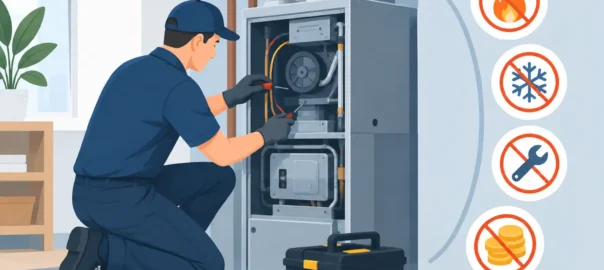
For a typical forced-air furnace, a technician may inspect and test the thermostat, air filter, blower assembly, electrical connections, ignition system, burners, flame sensor, limit switches, and safety controls. They may also check the venting system, gas connections, temperature rise, and visible signs of corrosion or water damage. If the furnace uses a condensate line, that component should be examined as well.
Airflow deserves special attention. A system can produce heat but still leave parts of the home uncomfortable if the filter is restricted, ducts are leaking, return vents are blocked, or the blower is not operating properly. A tune-up does not automatically solve every duct design issue, but it can reveal why the system is struggling to distribute heat.
For heat pumps, maintenance often includes checking the indoor and outdoor units, refrigerant-related performance indicators, defrost operation, electrical components, coils, and drainage. Heat pumps provide both heating and cooling in many homes, so their service needs can differ from those of a conventional furnace.
A thorough technician should explain what was found in plain language. You should understand whether a recommendation is a safety concern, a repair that should be scheduled soon, or an optional improvement that can wait. Clear answers matter when you are deciding how to protect both your comfort and your budget.
Maintenance Is Not the Same as a Repair
A tune-up is preventive service. It focuses on inspection, cleaning where appropriate, testing, and adjustments that help the system operate properly. A repair is needed when a part is damaged, failing, or no longer operating within safe or reliable limits.
That distinction matters because a tune-up can uncover a problem that requires additional work. For example, a technician may find a cracked igniter, a weak capacitor, a dirty flame sensor, or a blower motor drawing too much power. Finding that issue is a benefit of the visit, not a sign that maintenance failed.
When to Schedule Heating Maintenance
Early fall is usually the best time to schedule service for a furnace or other primary heating equipment. The weather is often mild enough that you can comfortably go without heat during the appointment, and technicians may have more availability before the first major cold snap.
If fall has already arrived, it is still worth scheduling. A tune-up is useful whenever the system is heading into a period of regular use. Homeowners who missed preseason maintenance should not assume they need to wait until next year.
Some situations call for service sooner than your regular annual appointment. Contact a qualified HVAC professional if you notice any of the following:
- The system starts and stops repeatedly or runs much longer than usual.
- Some rooms stay cold while others become uncomfortably warm.
- You smell burning, fuel odors, or persistent mustiness near the equipment.
- The furnace makes banging, screeching, rattling, or grinding noises.
- Your carbon monoxide alarm sounds, or anyone in the home develops sudden flu-like symptoms while the heat is running.
A carbon monoxide alarm is an essential safety device, but it is not a substitute for professional heating maintenance. If it sounds, get everyone to fresh air, follow emergency guidance, and have the source evaluated before using the equipment again.
Simple Steps Homeowners Can Take Between Visits
Professional maintenance handles the technical and safety-critical work, but homeowners can support better performance throughout the season. Replace or clean the air filter according to the equipment manufacturer’s guidance and your household conditions. Homes with pets, construction dust, or frequent system use may need more frequent filter checks.
Keep supply and return vents open and clear of furniture, rugs, and storage. Closing many vents in an attempt to force heat into certain rooms can create airflow problems and may put unnecessary strain on the system. Instead, mention persistent cold rooms during your service visit so the cause can be evaluated.
Make sure the area around the furnace, boiler, or air handler remains accessible and free of stored items. Combustible materials should never be kept near fuel-burning equipment. For outdoor heat pump units, remove leaves, branches, and snow buildup carefully while maintaining clearance around the unit.
It also helps to pay attention to changes. A new noise, a rising utility bill, frequent thermostat adjustments, or a system that takes longer to heat the home can provide useful clues. Calling early is usually less stressful than waiting for the equipment to stop completely.
When a Tune-Up Leads to a Replacement Conversation
An older heating system does not always need to be replaced. If it is heating safely, repairs are reasonable, and operating costs are acceptable, continued maintenance may be the right choice. Age alone is not a diagnosis.
Still, replacement becomes worth discussing when repairs are frequent, a major component fails, comfort is consistently poor, or the system is nearing the end of its expected service life. A technician should help you compare the immediate repair cost with likely future needs, energy use, warranty considerations, and the size and condition of your home.
The lowest upfront price is not always the best value, and the most expensive system is not automatically the right fit. Proper sizing, installation quality, duct condition, and thermostat setup all affect real-world comfort. Empire Care approaches these decisions with the goal of giving homeowners clear options, not pressure.
A heating system should not be something you worry about every time the forecast drops. Schedule service before the busy season when you can, ask direct questions about what your technician finds, and give your home the attention it needs to stay safe and comfortable when the cold sets in.