

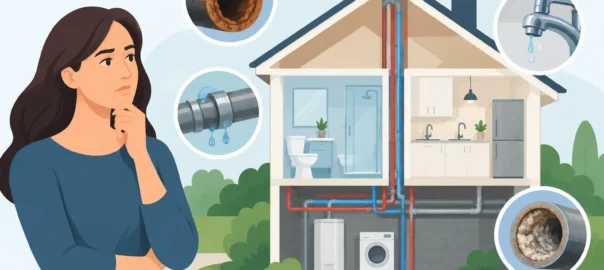
A pipe can fail quietly for years before it creates the kind of leak that damages ceilings, floors, or furniture. That is why knowing the signs your home needs repiping can help you make a measured decision before a plumbing problem becomes an emergency. A whole-home repipe is a significant project, but repeated repairs to aging pipes can cost more, disrupt your routine, and leave the underlying problem untouched.
Signs Your Home Needs Repiping
One isolated leak does not automatically mean every pipe in your home is failing. A loose fitting, worn supply line, or single damaged section may be repaired effectively. The concern begins when problems repeat in different rooms, water quality changes, or the plumbing system shows its age in several ways at once.
1. You have recurring leaks
A repaired leak should stay repaired. If you have had leaks behind walls, under sinks, near the water heater, or beneath the slab more than once, the issue may be the condition of the piping itself. As older pipes corrode, thin, or develop pinhole openings, fixing one spot does not prevent the next weak point from failing.
Watch for water stains, peeling paint, warped flooring, a musty smell, or an unexplained increase in your water bill. Even a small hidden leak can feed mold growth and cause expensive structural damage over time. A professional assessment can determine whether the leak is isolated or part of a larger pattern.
2. Your water comes out rusty, brown, or yellow
Discolored water is one of the clearest warnings that metal pipes may be corroding on the inside. Rust particles can break loose and travel to faucets, especially after water has been sitting in the pipes overnight or while you have been away.
Brown or yellow water can also come from a water heater, municipal work, or a temporary disturbance in the water supply. If the discoloration clears after running cold water for a short time and does not return, the source may be limited. But if it returns often, appears at multiple fixtures, or affects cold water as well as hot water, your pipes deserve a closer look.
3. Water pressure has dropped throughout the house
Low water pressure makes ordinary tasks frustrating. Showers feel weak, washing machines take longer to fill, and two fixtures running at the same time can leave everyone with a trickle. Mineral buildup and internal corrosion can narrow older pipes until water simply cannot move through them as it should.
Pressure problems are not always caused by failing pipes. A faulty pressure regulator, a partially closed shutoff valve, or a leak can produce similar symptoms. The key is proper diagnosis. Replacing pipes when the problem is a single valve is unnecessary, but ignoring widespread corrosion can keep you paying for temporary fixes.
4. Your plumbing is made of outdated or high-risk materials
The age of your home offers an important clue. Homes built decades ago may have galvanized steel pipes, which commonly corrode internally as they age. Some older properties may also contain polybutylene piping, a material associated with cracking and failure in certain conditions.
Not every older home needs immediate repiping, and the exact material matters. Copper and modern PEX plumbing can last for many years when properly installed. Still, if your home has older galvanized or polybutylene lines and you are already seeing leaks, low pressure, or discolored water, it is wise to discuss replacement before a larger failure occurs.
5. Repairs keep adding up
A plumbing repair is worthwhile when it solves the actual problem for a reasonable cost. It becomes less practical when you are calling for another pipe repair every few months. Beyond the repair invoices, consider the cost of missed work, water damage restoration, and the stress of wondering where the next leak will appear.
Ask for clear information about the condition of the surrounding pipe, not just the broken section. If corrosion is widespread, a planned repipe can be a better financial decision than continuing to patch a system near the end of its service life.
6. Your water has an unusual taste or odor
A metallic taste may point to corrosion within aging metal pipes. An earthy, musty, or sulfur-like odor can have several possible causes, including bacteria in drains, issues with the water heater, or water supply concerns. It should not be dismissed, especially when it appears with staining or discoloration.
A qualified plumbing professional can help separate a pipe issue from a fixture, drain, or water-heater problem. If there is any concern that water quality could affect your household’s health, use appropriate testing and follow local water guidance rather than guessing at the source.
7. You hear frequent banging, rattling, or whistling
Pipes can make noise for harmless reasons, such as water hammer when a valve closes quickly. But persistent banging, vibrating, or whistling may signal loose pipe supports, excessive water pressure, restricted lines, or aging components.
Noise alone is not a reason to repipe a home. Combined with leaks or low pressure, though, it can help complete the picture. A technician should inspect the plumbing system and water pressure before recommending major work.
8. You can see corrosion around exposed pipes
Take a look at exposed piping near the water heater, under sinks, in the basement, garage, crawl space, or utility room. Flaking, greenish buildup around copper fittings, rust, damp spots, or crusty connections can indicate deterioration.
Visible corrosion does not always reveal how the pipe looks inside the wall. It does, however, provide a useful reason to schedule an inspection. Catching deterioration before a line bursts gives you more control over timing, budget, and repair options.
9. Your home has had water damage from pipe failures before
Previous pipe leaks are more than a repair history. They are evidence that your home has already experienced the disruption and expense of plumbing failure. If a previous leak occurred in an older plumbing system, it is reasonable to ask whether nearby lines are likely to fail next.
A careful evaluation can identify areas where replacement is most urgent. In some homes, a partial repipe is the right answer. In others, replacing the full supply system at once avoids repeated wall repairs and helps protect finished spaces from future damage.
When a Repair Makes Sense and When Repiping Does
Repiping is not the automatic answer to every plumbing problem. A newer system with one damaged line, a failed fixture connection, or a localized freeze break may only need a targeted repair. This approach is often faster and less expensive when the rest of the piping is in good condition.
A whole-home repipe is more appropriate when the system has widespread corrosion, repeated leaks in separate locations, outdated pipe material, or ongoing pressure and water-quality concerns. The goal is not to sell more work than your home needs. It is to solve the cause of the problem instead of repeatedly responding to its symptoms.
A thorough evaluation should include a discussion of your home’s pipe material, age, repair history, water pressure, visible corrosion, and the locations of past leaks. Depending on the concern, the technician may also inspect the water heater, shutoff valves, fixtures, and accessible supply lines. This information supports a recommendation you can understand and compare.
What to Expect During a Whole-Home Repipe
A professional repipe begins with a clear plan. Your plumbing team should explain which lines are being replaced, the recommended material, where access will be needed, how long work is expected to take, and what wall or ceiling repairs may be required afterward.
Modern replacement materials are selected based on the home’s layout, local code requirements, water conditions, and budget. Copper remains a proven option, while PEX is commonly used for its flexibility and corrosion resistance. There is no single best material for every property. The right choice depends on your system and the installation plan.
During the project, technicians typically protect work areas, shut off water as needed, install new supply lines, test connections, and restore service. Some access holes in drywall may be necessary. That inconvenience is real, but a planned project is usually far less disruptive than emergency water damage after a burst pipe.
Plan Before a Small Leak Becomes a Major Repair
If you suspect aging pipes, start documenting what you see. Note the date and location of leaks, take photos of discoloration or corrosion, and keep plumbing invoices. This record helps reveal patterns that are easy to miss when each issue happens months apart.
Do not wait for a pipe to burst to ask questions. A clear diagnosis gives you time to review options, schedule work around your household, and make a confident decision. Empire Care can assess the condition of your plumbing, explain whether repair or repiping is the sensible path, and help you protect the comfort and safety of your home.